

Summary: A new modelling approach to estimate Salmonella inactivation in low-moisture foods under non-isothermal elevated-heat conditions involves tracking temperature changes in real-time and applying sequential kinetic modelling.
Source link: Journal of Food Protection
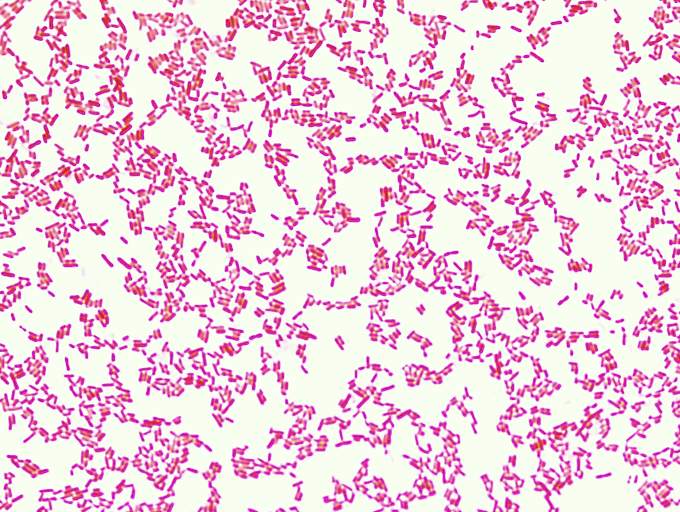
Estimating Salmonella Inactivation in Low Moisture Foods
Why This Matters:
- Risk in low-moisture foods: Flaxseed and other low-moisture foods (LMFs) are challenging to decontaminate and Salmonella is notoriously heat resistant in such matrices. Traditional thermal validation often assumes constant temperature, which can misestimate lethality.
- Real-world process relevance: Industrial thermal processes seldom maintain perfect isothermal conditions. This modeling strategy provides better-aligned validation data for actual production scenarios, improving both safety and efficiency.
- Regulatory and preventive controls: More accurate inactivation parameters support robust HACCP/FSMA preventive control plans, helping processors demonstrate required log-reductions under process deviations.
- Generalizable tool: While applied to flaxseed, this framework could be extended to other LMFs (nuts, spices, powders), enabling broader improvements in food safety validation.
Key Findings:
Faliarizao et al. (2025) have elaborated a novel modeling approach to estimate Salmonella inactivation parameters under non-isothermal (dynamic) elevated-heat conditions.1 By tracking temperature changes in real-time during heating and applying sequential kinetic modeling (e.g., Weibull), they derive inactivation parameters that better reflect real-process conditions than traditional isothermal models. Their method quantifies D-values and z-values adapted to fluctuating temperature profiles, offering a more realistic basis for food safety validation in low-moisture food (LMF) processing.
Bigger Picture:
This study represents a meaningful step forward in predictive microbiology for food safety, particularly for low-moisture foods. By acknowledging and modeling non-isothermal heating, Faliarizao et al. offer a more accurate, process-relevant way to estimate pathogen reduction.
Key considerations for food safety and quality assurance teams:
- Incorporating their method could reduce over-engineering of thermal processes, saving energy or reducing product degradation while still achieving the required log reductions.
- It strengthens the scientific defensibility of HACCP or preventive control validations by aligning thermal process parameters with real-world behavior.
- As this modelling approach is adapted to other LMFs, it could help raise the bar for process safety validation across the food industry.
References:
- Faliarizao et al. (2025). A New Approach to Estimate Salmonella Inactivation Parameters During Dynamic Elevated Heat Treatment: A Case Study with Flaxseed. Journal of Food Protection, 100666.