

Summary: AI-integrated biosensors combine advanced biorecognition and machine learning to reduce matrix interference, improve signal interpretation, and enable rapid detection of pathogens in complex food systems.
Source links: Food and Bioproducts Processing
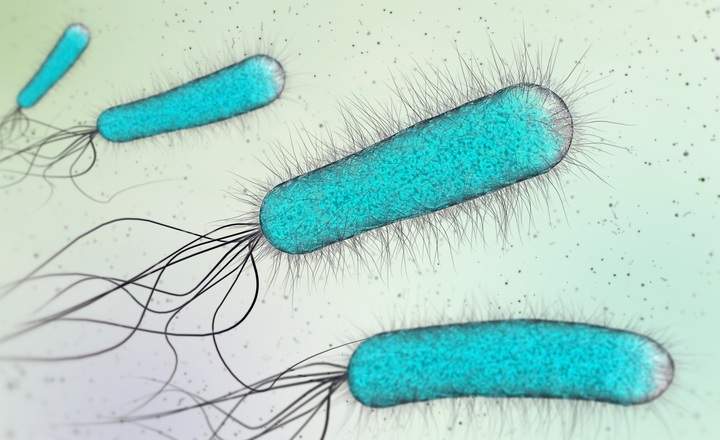
AI-Enhanced Biosensors Can Improve Pathogen Detection in Complex Food Matrices
(Image Credit: iStock/Christoph Burgstedt)
Why This Matters:
- Food matrices (fat, protein, carbohydrates, salts, polyphenols etc) can introduce significant analytical interference, limiting sensitivity and specificity of traditional detection methods.
- Conventional microbiological and molecular methods are labor-intensive and slow, delaying intervention in contamination events.
- AI-powered biosensors enable rapid, automated, and high-resolution detection, supporting real-time monitoring across the supply chain.
- Improved detection in complex matrices is critical for high-risk foods (e.g., dairy, RTE products, infant formula) where low-level contamination can have severe consequences.
Key Findings:
This review examines how AI-integrated biosensors are improving food safety testing in complex food matrices through the combination of advanced biorecognition systems and machine learning algorithms.¹ Major concepts covered include:
- AI reduces matrix interference: Machine learning models, particularly convolutional neural networks (CNNs), improve signal interpretation by reducing background noise, nonspecific interactions, and matrix-induced variability commonly encountered in food samples.
- Rapid pathogen detection: AI-enhanced biosensor systems demonstrated detection of foodborne pathogens at colony-forming-unit levels within approximately 60 min, substantially faster than conventional culture-based workflows.
- Improved classification accuracy: Automated feature extraction and pattern-recognition algorithms improved classification performance across diverse food matrices, supporting more reliable detection in heterogeneous food systems.
- Integration with CRISPR-based detection: Combining AI with CRISPR–Cas biosensors enabled highly specific nucleic acid detection with improved signal interpretation and potential for rapid, low-infrastructure testing platforms.
- Potential for real-time monitoring: AI-supported biosensors facilitate automated analysis, portable deployment, and near–real-time decision-making, supporting continuous monitoring throughout the food supply chain.
- Key translational challenges remain:
- Dependence on large, high-quality datasets
- Inter-laboratory variability and lack of standardization
- Enzyme instability and biosensor robustness issues
- Regulatory validation and explainable AI requirements.
Bigger Picture:
This review captures a fundamental shift in food safety diagnostics—from chemistry- and biology-limited detection systems to data-driven, adaptive sensing platforms. Traditional biosensors struggle in real-world conditions because food matrices introduce variability that cannot be easily controlled through assay chemistry alone. AI effectively becomes a computational layer that compensates for biochemical noise, enabling reliable detection in environments where classical methods fail.
References:
- Fatemi. et al. 2026. AI-Powered Biosensors for Food Safety: Resolving Biomolecular Challenges in Complex Food Matrices. Food and Bioproducts Processing.