

Summary: Novel diagnostic system for rapid detection of Salmonella enterica that combines isothermal nucleic acid amplification with CRISPR-based collateral cleavage to enable highly sensitive and specific detection.
Source links: Diagnostics
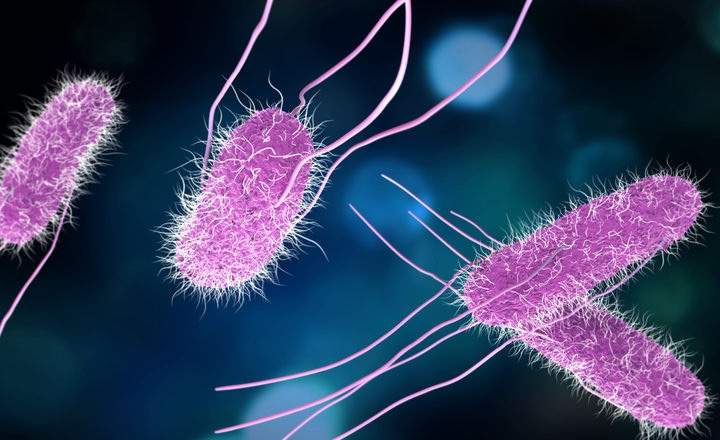
Feasibility of Salmonella enterica detection Using a RPA–CRISPR/Cas12a Platform
(Image Credit: iStock/urfinguss)
Why This Matters:
- Salmonella enterica remains a leading cause of foodborne illness globally, requiring rapid detection for outbreak prevention and clinical management.
- Conventional methods (culture and PCR-based workflows) are time-intensive and laboratory dependent, delaying intervention.
- RPA–CRISPR systems enable rapid, isothermal amplification coupled with sequence-specific detection, reducing reliance on complex instrumentation.
- Such platforms support point-of-care and field-deployable diagnostics, improving food safety surveillance and outbreak response.
Key Findings:
Akimbekova et al. report on a field-deployable RPA–CRISPR/Cas12a molecular platform for rapid detection of Salmonella enterica.1 The workflow integrates isothermal recombinase polymerase amplification (RPA) with CRISPR/Cas12a-mediated detection targeting multiple pathogen-specific genes (stn, siiD, sirA, and pagN). Following 20 minutes of RPA amplification at 37°C, products were incubated with a pre-assembled Cas12a/crRNA complex for 10–30 minutes at 37°C. Target sequence recognition activated Cas12a collateral cleavage, resulting in cleavage of a FAM-labeled reporter, with results visualized under UV light with the naked eye.
Performance characteristics
- Analytical sensitivity: Detection limit of 10² copies per reaction within ~10 minutes, demonstrated using the pagN gene target.
- Specificity: Inclusivity confirmed across 4 target Salmonella strains. Exclusivity demonstrated against 6 non-target organisms, with no cross-reactivity observed.
Bigger Picture:
This study reflects the accelerating transition toward CRISPR-based molecular diagnostics as next-generation tools for foodborne pathogen detection. The integration of isothermal amplification (RPA) with CRISPR/Cas12a specificity overcomes key limitations of conventional PCR by eliminating thermocycling requirements while maintaining high analytical performance.
However, key studies are required to address:
- Broader selectivity analysis
- Sample matrix inhibition in real-world samples
- Requires redesign for emerging strains or novel variants
Overall, RPA–CRISPR/Cas12a systems represent a strong intermediate step toward fully integrated, sample-to-answer pathogen detection platforms.
References:
- Akimbekova et al., 2026. Integrated RPA–CRISPR/Cas12a Technology for Rapid Detection of Salmonella enterica. Diagnostics.