Wastewater Treatment
Liquid Stream
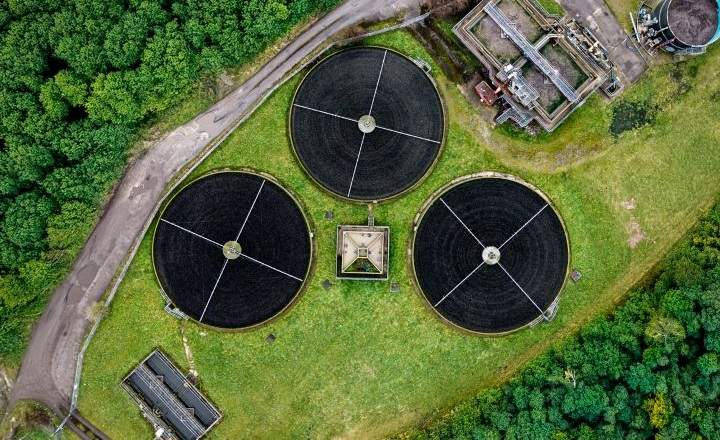
The liquid stream is the natural flow of wastewater from industries and homes to the treatment plant. Surface water runoff carries its own special challenges with petroleum, herbicide and pesticide by-products. Issues specific to collection systems can range from odors, to overflows, to flow reductions as a result of biofilm and grease accumulations. Associated with these performance issues are the concomitant worker and environmental safety issues.
Control, while important in the collection system, is much more critical at the treatment plant as a result of growth and urbanization placing neighbors much closer in proximity. Odor filters may be of chemical and/or biological design. Filters based on chemical interactions are easy to monitor while biological filters are difficult to monitor because the engineering does not quantify nor identify the biological components. IEH is uniquely qualified to assess the microbial populations in a biofilter or process, and fingerprint and store those organisms for archival purposes. Those organisms and fingerprint profiles would then be available for comparison against any future changes in operating efficiency. Secondary treatment for biological and nutrient control usually leads to discharge of the treated effluent water under National Pollution Discharge Effluent Standards (NPDES) permit to receiving waters. With the advent of multiple dischargers on a body of water, the cumulative loading on that water has become an important factor in NPDES permits. In response to this, Total Maximum Daily Load (TMDL) studies have been designed to help regulators evaluate the impacts on a receiving water. IEH has been critically involved in a number of TMDLs using our Microbial Source Tracking (MST) methods. Reclaimed or Reused water is an emerging arena for increased public health and regulatory scrutiny. Currently, most evaluations have been limited to Heterotrophic Plate Counts and Total Coliforms. These indicators traditionally monitor organisms that were transmitted by the oral/ingestion route. However, organisms such as Legionella, Mycobacterium tuberculosis, Coxsackie and other related respiratory viruses, are likely to become a concern as the reclaimed water industry grows. Appropriate development and monitoring programs can aid in addressing these issues and enhancing marketability of the product. Discharging to large receiving bodies of water which may influence or be directly used by downstream communities is a recognized challenge. Adequate treatment reduces the populations of known organisms of concern, but documented quality based on analytical results provides proof of the treatment processes’ effectiveness. IEH has qualified microbiologists and facilities for performing tests on effluents and receiving waters for organisms that may be of drinking water concern.Solid Stream
The solid stream occurs at the beginning of the treatment plant process where sedimentation is encouraged, enhancing the precipitation and settling of solids from the liquid influent stream. Solids are accumulated throughout the process and treated in various ways to reduce their volume and water content while attempting to enhance the destruction of pathogenic microorganisms.
Characterization of biosolids can provide much useful information for marketability and economic value. Final disposition of the solids (biosolids) is subject to EPA's "503" regulations and is basically defined by its regulated microbial population, its metals accumulation, and its stability in terms of bacterial regrowth potential. Biosolids Analysis
Characterization of biosolids can provide much useful information for marketability and economic value. Final disposition of the solids (biosolids) is subject to EPA's "503" regulations and is basically defined by its regulated microbial population, its metals accumulation, and its stability in terms of bacterial regrowth potential.
IEH staff have extensive experience in wastewater and solids analysis, including assays for "503" regulatory compliance. Salmonella, Enterovirus and Ascaris assays are routinely performed on various treatment plant process matrices including complex matrices such as alkaline stabilized biosolids. Treatment plants operate on the basis of biological processes at a microbial level. In addition to routine monitoring tests, IEH is uniquely qualified to assist in all areas of applied microbiology including process control and enhancement as well as biofilter and odor control evaluations. Application of Class B biosolids requires a monitoring program. IEH can provide assistance in developing a monitoring program which addresses the specific potentials which maybe inherent in the combination of the treatment process, the application site, the application process and the associated risks. |